
The Cost of Ignoring Machine-Driven Access in Security Programs
%201.png)
Christian Simko
The Cost of Ignoring Machine-Driven Access in Security Programs
Digital environments were once centered on human users, but that has changed.
Cloud workloads, APIs, AI agents, and IoT systems rely on machine identities to operate. Behind the scenes, service accounts, keys, certificates, and tokens keep modern infrastructure running.
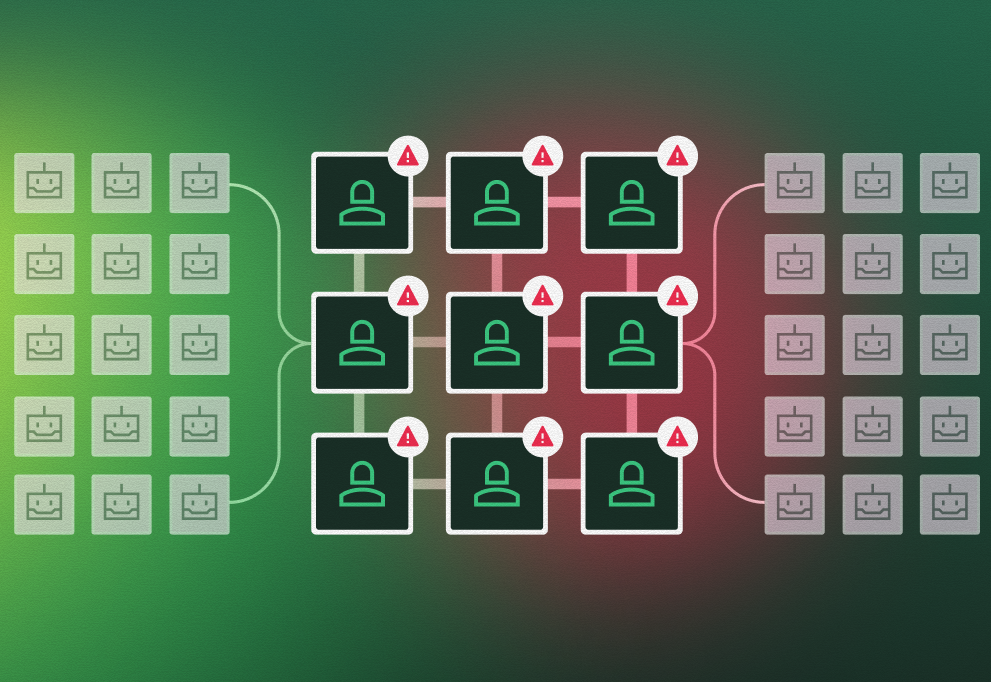
In many organizations, machine identities now outnumber humans by 10 to 50 times, quietly expanding an attack surface that few security teams fully see. Ignoring machine-driven access doesn’t just create technical gaps—it increases compliance risk and security costs.
Why Machine Identities Are Different
Traditional identity and access management (IAM) programs were built for people. Humans log in interactively, use multifactor authentication (MFA), and follow predictable patterns.
Machines operate differently. They run continuously, at scale, and often without oversight, creating a different risk profile. Without visibility, investigators may see activity but miss the access path behind it.
Human vs. Machine Identity Risk Profile
The Hidden Costs of Ignoring Machine-Driven Access
Many organizations don’t realize the cost of unmanaged machine identities until after an incident. The risks fall into four major categories.
1. Expanded Attack Surface
The attack surface has grown. Every unmanaged API key, token, or service account is a potential entry point. Attackers scan repositories, logs, and misconfigured cloud services for exposed credentials. Automated authentication enables undetected access.
2. Persistent, Legitimate Access for Attackers
Short-lived tokens are often treated as a solution, but without governance, attackers can continuously request new tokens using compromised machine credentials.
From the platform’s perspective, everything appears legitimate because:
- The requests come from valid identities
- The tokens are properly issued
- No interactive login anomalies are detected
This creates persistent access without triggering traditional alerts.
3. Compliance and Audit Failures
Most compliance frameworks assume strong identity governance exists. However, machine identities frequently fall outside traditional IAM controls.
Common audit issues include:
- Unknown or untracked service accounts
- Expired or unmanaged certificates
- Hard-coded credentials in code
- Lack of ownership for machine identities
These gaps can lead to failed audits, delayed certifications, or regulatory penalties.
4. Operational and Financial Impact
When machine credentials are compromised, attackers often move laterally, increasing recovery costs. Unmanaged machine access increases:
- Incident response time
- Forensic investigation costs
- Downtime from compromised workloads
- Legal and regulatory exposure
The consequences extend beyond the initial incident, as the cost drivers below illustrate.
Real-World Cost Drivers of Machine Identity Risks
Why Traditional IAM Isn’t Enough
Most organizations assume their existing identity and access management (IAM) solution covers machine identities. In reality, these tools are often built for human users and don’t address machine-specific risks.
Key gaps include:
- Lack of discovery for non-human identities
- No ownership or accountability tracking
- Limited token and certificate lifecycle controls
- No behavioral baselines for machine activity
- Inability to enforce least privilege dynamically
As environments become more automated and AI-driven, these gaps become more dangerous.
Signs Your Organization Has a Machine Identity Problem
Many security leaders underestimate just how large machine-driven access has become. Warning signs include:
- More service accounts than human users
- Credentials stored in scripts or configuration files
- Tokens with excessive permissions
- Unknown or expired certificates
- No centralized inventory of machine identities
- Lack of ownership for automation accounts
If any of these conditions exist, the organization likely has hidden exposure.
How to Reduce Machine-Driven Access Risk
To control the cost and risk of machine identities, security programs should:
1. Discover All Machine Identities
Start by building a complete, continuously updated inventory of every non-human identity across cloud, on-prem, SaaS, and AI-driven systems.
Your discovery process should identify:
- Service accounts
- API keys
- Tokens
- Certificates
- Workload identities
2. Assign Ownership
Every machine identity should have clear accountability. Unowned or “orphaned” credentials are a common source of breaches and audit findings.
For each identity, define:
- A responsible owner (team or individual)
- A clear business or operational purpose
- An approved scope of access
- A documented lifecycle, including creation, rotation, and retirement
3. Enforce Least Privilege
Over time, machine identities accumulate excess privileges. Context-aware policies cut risk by restricting access based on time, location, workload, or behavior.
- Grant only the minimum permissions required for each task
- Use role-based or policy-based access where possible
- Separate identities by function rather than sharing credentials
- Review and reduce privileges on a regular schedule
4. Implement Credential Rotation
Short-lived credentials help, but without governance, attackers can generate new ones repeatedly. Rotation must be automated and enforced at scale.
Key strategies include:
- Automated rotation for API keys, tokens, and certificates
- Controls limiting who or what can request credentials
- Behavioral monitoring for abnormal token requests
- Limits on token issuance to prevent continuous renewal
5. Monitor Machine Behavior
Machine identities operate nonstop, so behavioral monitoring is critical. Watching for abnormal activity helps uncover compromises, even when the credentials appear valid.
Establish baselines for normal machine behavior, then detect:
- Unusual token or credential requests
- New or unexpected access paths
- Access from unfamiliar environments
- Privilege escalation attempts
- Sudden increases in activity volume
Together, these controls help organizations reduce risk, improve audit readiness, and bring machine-driven access under control.
The Real Cost of Ignoring Machine Identities
Modern operations now run on machine identities, not just human users. Without ownership, lifecycle controls, and monitoring, those identities can quietly accumulate excessive privileges, becoming prime targets and common sources of compliance gaps.
In an era defined by automation, cloud, and AI, governing machine access is no longer optional.