
Identity Orchestration for Non-Human Identities in Modern Enterprises
%201.png)
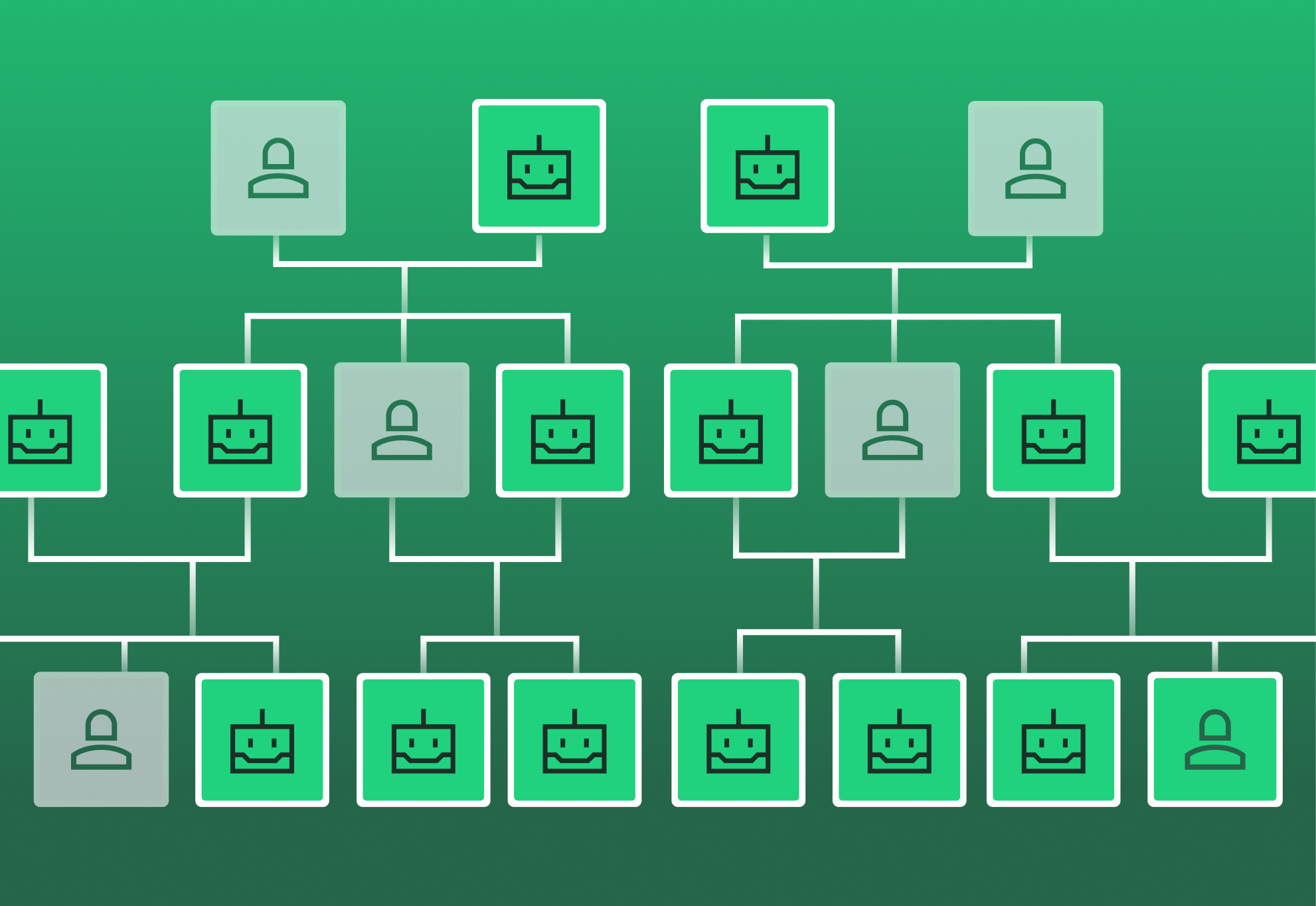


The modern enterprise is a sprawling, interconnected organism. It is no longer defined by physical office buildings or even a single cloud provider. It is defined by the flow of data across a complex mesh of applications, microservices, containers, and AI agents. In this digital ecosystem, human employees are becoming the minority. The vast majority of authenticated interactions, upwards of 90% in some environments, are performed by Non-Human Entities (NHIs).
Service accounts, API keys, bots, serverless functions, and autonomous agents are the silent workforce powering digital transformation. Yet, while we have sophisticated Identity and Access Management (IAM) suites to manage the lifecycle of a human employee, from the start of their workday to their last shift offboarding, the management of machine identities remains fragmented, manual, and dangerously static.
We typically handle machine identities with a "set it and forget it" mentality. A developer generates an API key, hard-codes it into a script, and deploys it. Three years later, that developer is gone, but the key remains, one that is valid and unrotated. This leaves a lot of questions as to negligence, as proper identity management would involve cutting off the key and shutting it down.
To solve this problem, organizations must move beyond simple credential vaulting and embrace identity orchestration for non-human entities. Orchestration is the connective tissue that binds disparate systems together, applying dynamic logic to the lifecycle of machine credentials. It allows us to manage millions of ephemeral identities with the same rigor (and far greater speed) as we manage human ones.
Introduction
Why is identity orchestration vital for scalable, automated identity workflows? The answer lies in the sheer volume and velocity of modern infrastructure. We are living in the age of ephemeral software. Containers spin up for seconds to process a transaction and then vanish. AI agents spawn sub-agents to handle specific tasks and then terminate.
In this environment, manual provisioning is impossible. You cannot have a human administrator clicking buttons to approve access for a microservice that will only exist for 300 milliseconds. Security must be instantaneous and automated.
On top of this, the identity fabric of the modern enterprise is torn. You have identities in AWS IAM, identities in Azure AD (Entra ID), identities in GitHub, identities in Snowflake, and identities in your on-premise Active Directory. None of these systems naturally talk to each other. A deletion event in your HR system triggers a workflow for a human, but deleting a repository in GitHub rarely triggers the revocation of the associated cloud service account.
Machine identity orchestration bridges these gaps. It creates a unified control plane that acts as a central nervous system, detecting changes in one environment and automatically triggering policy-driven updates across the others.
Understanding Identity Orchestration
Identity orchestration is often confused with simple provisioning or federation, but it is very different, as a matter of fact. It is the automated management of complex identity workflows across hybrid and multi-cloud environments.
How It Differs from Identity Provisioning
Identity provisioning is a linear, point-to-point process. It answers the question: "How do I give User X access to App Y?" It is usually a one-time event: create the account, assign the role, and stop.
Identity orchestration is a circular, logic-based process. It answers the question: "How do I manage the entire lifecycle of Access Y based on the changing context of Identity X?" It involves conditions, triggers, and multiple steps.
Let’s give an example, provisioning is creating an API key for a payment gateway. Orchestration, in this case, would be the workflow that:
- Detects that a new payment service is being deployed via Terraform.
- Validates that the service has the correct security tags.
- Generates a short-lived API key from the vault.
- Injects that key into the Kubernetes secret store.
- Monitors the usage of that key.
- Automatically rotates the key every 24 hours without downtime.
- Revokes the key instantly if the service is flagged as compromised.
Provisioning would be the action, and orchestration is the intelligence surrounding the action.
Why Machines Require Dynamic Identity Logic
Humans are relatively static. We have a name, a role, and a department. We generally work predictable hours. Machines are dynamic and unpredictable.
Device access automation and machine identity management require dynamic logic because machines operate in high-variance contexts.
- Scale: An auto-scaling group might expand from 5 instances to 500 during a traffic spike. Orchestration must issue 495 new identities instantly and revoke them just as fast when traffic subsides.
- Ephemerality: In serverless architectures, an identity might need to be valid for only the duration of a single function execution. Static keys are a massive liability here.
- Context: A machine's trustworthiness changes based on where it is running (e.g., a trusted dev environment vs. a public internet-facing zone). Orchestration policies need to evaluate this context in real-time before granting access.
Without dynamic orchestration, security teams are forced to grant broad, long-lived permissions (aka over-provisioning) just to ensure things don't break when the environment changes. Orchestration allows for Just-in-Time (JIT) access, which is the holy grail of zero trust architecture.
Orchestration vs. Management
The Architecture of Non-Human Identity Orchestration
Building an orchestration layer for NHIs requires a different architecture than human IAM. It must be API-first, agentless (where possible), and capable of handling massive throughput.
The Integration Layer: Connectors and APIs
The foundation of orchestration is connectivity. The orchestration platform must have deep integrations, via APIs, with the entire technology stack. This includes:
- Cloud Service Providers (CSPs): AWS, Google Cloud, Azure.
- Identity Providers (IDPs): Okta, Ping, Entra ID.
- DevOps Tools: Jenkins, GitHub, GitLab, Terraform.
- Secret Managers: HashiCorp Vault, CyberArk, AWS Secrets Manager.
- Workloads: Kubernetes clusters, Databases, AI Models.
The orchestration engine acts as a "hub" that speaks the native language of all these "spokes." It translates a high-level policy ("Rotate database keys every day") into the specific API calls required for AWS RDS, Azure SQL, and MongoDB.
The Logic Layer: Policy Engine
This is the brain of the operation. The policy engine contains the rules that govern enterprise IAM for machines. It allows security teams to define logic using "If/Then" structures.
- Rule (example): "If a new AI agent is detected in the 'Production' VPC, AND it is running unsigned code, THEN block access to the 'Customer Data' S3 bucket AND alert the SOC."
The Abstraction Layer
For developers, orchestration provides an abstraction layer. Instead of hard-coding an AWS credential into their application, they write code that requests an identity from the orchestration layer. The orchestrator checks the policy, mints a credential, and hands it back. This decouples the application logic from the identity logic, allowing security teams to change authentication methods (e.g., moving from keys to mTLS) without forcing developers to rewrite code.
Automating Identity Lifecycle Events
The core value of orchestration is the automation of the NHI lifecycle. This replaces the ticketing systems and manual spreadsheets that currently plague IT operations.
Onboarding (Birth)
When a developer commits code that defines a new microservice (Infrastructure as Code), the orchestration layer should intercept this event. It creates the necessary service accounts, generates complex secrets, stores them in a vault, and injects the reference into the workload. The identity is born secure, with least-privilege access, and without a human ever seeing the password.
Rotation (Maintenance)
Credential rotation is the most painful part of machine identity management. Manual rotation causes downtime. Orchestrated rotation is seamless. The system generates a new key, distributes it to the application, confirms the application is using the new key, and only then revokes the old key. This "overlapping" rotation ensures zero interruption to business services while rendering stolen keys useless within hours or minutes.
Expiration and Revocation (Death)
Most NHIs are immortal today. Orchestration introduces mortality. We can set Time-to-Live (TTL) policies on identities. If a service account hasn't been used in 30 days, the orchestrator disables it. If a workload is deleted from Kubernetes, the orchestrator detects the deletion and immediately revokes the associated cloud credentials. This automatic garbage collection is key to preventing the accumulation of stale identities that attackers love to exploit.
Benefits for Security and Compliance
Implementing identity orchestration for non-human entities, entirely transforms the security posture of an organization, as you will see below:
Unified Control Plane
Token Security provides a unified view of all non-human identities. You cannot govern what you cannot see. Orchestration brings every service account, bot, and agent into a single dashboard. This allows for global policy enforcement. You can push a button to rotate all keys across AWS, Azure, and GCP simultaneously during a breach response, greatly reducing the time and stress you’d need to spend with other issues.
Real-Time Visibility and Auditability
Compliance audits (SOC2, ISO 27001, HIPAA) are notoriously difficult when it comes to machine access. Auditors ask, "Who has access to this database?" and the answer is usually a messy list of cryptic service account names. Orchestration provides a structured, immutable log of every machine interaction. You can prove exactly when an identity was created, why it was given access, how it was used, and when it was destroyed.
Reduced Attack Surface
By automating rotation and enforcing expiration, orchestration drastically reduces the lifespan of credentials. An attacker who steals a static API key might have access for years. An attacker who steals an orchestrated, short-lived token might have access for 15 minutes. This creates a moving target that is incredibly difficult to compromise.
Conclusion
The large number of non-human entities in the enterprise has crossed the threshold of human manageability. We can no longer rely on manual processes, spreadsheets, or disjointed scripts to secure the keys to our kingdom. As we accelerate into the era of agentic AI, where machines are creating other machines, the complexity will only compound and grow.
Identity orchestration, we believe, is the answer. It turns fragmented, error-prone identity processes into easier, cohesive, policy-driven automation. It allows businesses and corporations to move fast, without leaving a ton of unsecured credentials behind.
At Token Security, we are building the machine-first identity security platform that makes this orchestration possible. We provide the visibility, the context, and the control necessary to manage the lifecycle of every non-human identity, from code to cloud to AI. By orchestrating the identity, we secure the machine; and by securing the machine, we protect the modern enterprise.
Secure Every AI Agent.
From Creation to Runtime.