
Why Runtime Access Context Matters More Than Static Permissions
%201.png)


Why Runtime Access Context Matters More Than Static Permissions
For years, static permissions were enough. A user logged in, received a role, and kept that access until something changed. In predictable, human-centric environments, that model worked.
But modern environments aren’t predictable. Cloud-native systems scale automatically, tokens refresh constantly, and machine identities operate without pause. In this world, what mattered at login quickly becomes outdated. That’s why runtime access context, not static roles,has become essential.
The Limits of Static Permissions
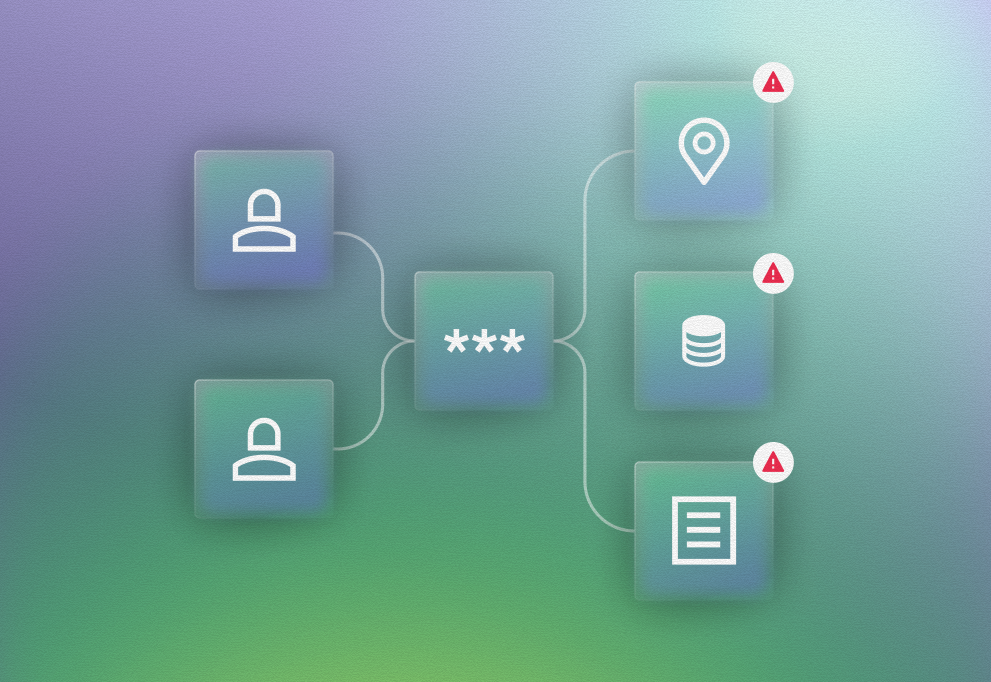
Static permissions have hard limits. They define what an identity can do, but rarely account for how or when that access occurs. For example:
- A service account may have legitimate read access to a database.
- A developer may have admin privileges in a cloud environment.
- An AI agent may be authorized to call certain APIs.
On paper, everything checks out. But risk doesn’t live on paper; it shows up in context.
- Is that service account running in a compromised container?
- Has the developer logged in from an unknown device in an unfamiliar location?
- Was the AI agent triggered by malicious input?
Static permissions can’t answer those questions. They confirm entitlement, not intent, and attackers exploit that gap. The real risk is granting authorized access under the wrong conditions.
Static Permissions vs. Runtime Reality
What Is Runtime Access Context?
Runtime access context evaluates access in the moment, not just at login. It moves beyond the question of whether access should be granted to ask a more important one: should it be allowed right now?
The answer is shaped by real-time signals, including:
- Device health and security posture
- Network location and IP reputation
- Behavioral patterns
- Time of day
- Workload integrity
- Token usage patterns
- AI agent activity
No single signal tells the full story. But together, they reveal whether the request reflects expected behavior, or something that calls for a closer look.
This is the foundation of Zero Trust, where trust is never assumed and must be continuously verified.
Why Runtime Context Matters More Than Ever
This shift requires identity-first controls built for how modern systems actually operate.
Identities are no longer just human
Machine identities, service accounts, and AI agents now outnumber users. They operate continuously, scale dynamically, and often lack strong governance. Static roles define baseline access, but only runtime context can validate it in motion.
Short-lived credentials don’t solve the problem
Short-lived credentials may reduce exposure, but they don’t prevent misuse. A compromised workload can continuously request new tokens, each one valid. Without context, the activity appears legitimate.
Attackers use legitimate access paths
These days, attackers don’t break in; they log in. They hijack sessions, abuse tokens, and manipulate trusted systems. Static permissions treat this as normal. Runtime context reveals when it isn’t, as illustrated below.
How Static and Contextual Models Differ in Practice
The Shift Toward Context-Aware Access
Security models are evolving to operate in real time. That shift includes:
- Continuous access evaluation: Instead of just validating trust once, it must be continuously validated, ensuring identity, device, and environment remain aligned over time.
- Risk-based policies: Access decisions evolve with risk, adapting in real time instead of relying on static roles and assumptions.
- Behavioral monitoring: Identity and token activity are continuously observed, allowing anomalies to surface as they happen instead of after the fact.
- Identity-first security: The focus shifts from infrastructure to identity, where behavior and context define how access is granted and maintained.
Together, these changes reflect a broader shift toward identity-first security, where access is defined not just by what’s assigned, but by how identities behave in context.
What Runtime Context Looks Like in Practice
Instead of relying only on roles, systems evaluate real-time signals before allowing access, asking not just who is requesting access, but whether the request makes sense in the moment.
A context-aware decision considers:
- Is the device compliant with security policies?
- Has this identity behaved normally over time?
- Is the request coming from an expected environment?
- Is the workload in a trusted runtime state?
- Does this activity align with the identity’s normal function?
Each signal adds context. Individually, they may appear benign. Together, they reveal whether the request reflects normal behavior or something suspicious.
If something about the request doesn’t add up, access can be restricted, challenged, logged, or revoked automatically.
Why Static Permissions Alone Are No Longer Enough
Static permissions set the baseline, but they don’t tell the full story. In today’s dynamic, automated, token-driven, and AI-assisted environments, access is no longer static. Permissions define what’s possible. Context determines what’s appropriate.
Without that context, organizations risk:
- Persistent attacker access through compromised identities
- Misuse of machine credentials
- Unauthorized AI-driven actions
- Compliance gaps due to limited visibility
Runtime access context closes that gap by aligning access decisions with real-world conditions, ensuring what’s allowed reflects what’s actually happening.
The Future of Access Control
Access decisions are moving beyond static roles to real-time context. Permissions define what’s possible. Runtime signals determine what’s appropriate, and that difference is everything.
Trust is no longer a fixed state. It’s a continuous evaluation, shaped by behavior, environment, and intent in the moment.
Because the real danger isn’t unauthorized access. It’s when trust itself is turned against you.
Secure Every AI Agent.
From Creation to Runtime.