
Why Security Teams Lose Access Control Before They Detect Breaches
%201.png)


Why Security Teams Lose Access Control Before They Detect Breaches
There is a dangerous misconception in the cybersecurity industry regarding how and when a breach actually begins. We are conditioned to think of a breach as a singular, noisy event. We imagine a sudden influx of malicious network traffic, a red alert flashing on a security dashboard, or a ransomware note appearing on a server screen.
The reality is far less dramatic and significantly more insidious. The true beginning of a breach is almost always silent. According to the latest research on data breaches, organizations routinely take over two hundred days to identify an intrusion.
Why does this massive gap exist? It exists because attackers do not hack in; they log in. By the time your security operations center detects anomalous behavior, the adversary has already been operating inside your network for months. They have been using valid credentials. They have been hiding in plain sight.
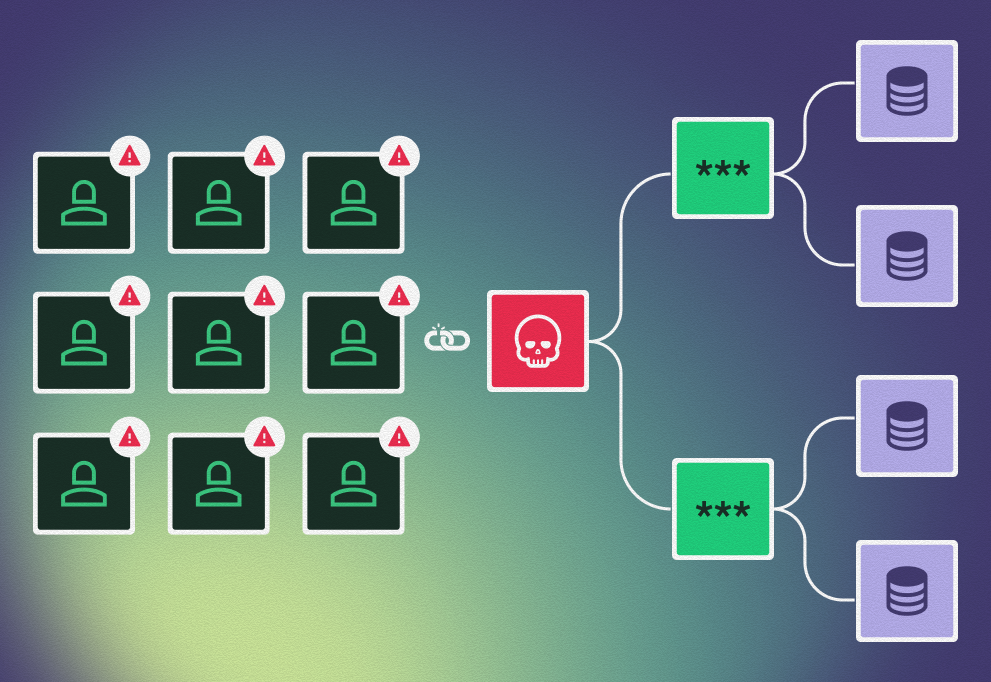
At Token Security, we know that the initial failure is not a detection failure. It is a governance failure. Security teams lose access control long before they ever detect the breach. They lose control the moment a developer hardcodes an API key, the moment a service account is overprovisioned, and the moment an autonomous AI agent is granted unmonitored access to a production database.
To stop modern attacks, we must fundamentally change our timeline. We must secure the identity before the attacker ever finds it.
The Illusion of Control in Modern Cloud Environments
We have invested billions of dollars into Identity and Access Management (IAM) platforms. We mandate single sign-on and enforce multi-factor authentication for every human employee. This creates a comforting illusion of control. We believe that because the front door is locked, the building is secure.
However, the modern cloud environment is not a single building with a single door. It is a sprawling, decentralized city of microservices, containers, and serverless functions.
The Gap Between Provisioning and Monitoring
The first place we lose control is in the gap between provisioning access and monitoring it. Provisioning in the cloud is instant. A developer can spin up a new workload and assign it an identity in seconds. This speed is necessary for business innovation.
Unfortunately, security monitoring does not move at the same speed. Security teams are rarely consulted when a new service account is created. This leads to a proliferation of overprovisioned identities where identities are born in the shadows. The security team cannot monitor an identity they do not know exists. The access control is lost at the exact moment of creation.
How Non-Human Identities Bypass Traditional Scrutiny
This problem is magnified exponentially by the rise of Non-Human Identities (NHIs). Service accounts, API keys, and automated bots now make up the vast majority of actors in any enterprise environment.
Human identities are heavily scrutinized. When an employee is hired, they go through background checks. When they change departments, their access is reviewed. When they quit, their accounts are disabled.
Machines enjoy no such oversight. A non-human identity is frequently created for a temporary script and then abandoned. It undergoes no periodic review. It is never offboarded. Because NHIs bypass the traditional scrutiny applied to humans, they form a massive, unmanaged attack surface.
The Mechanics of Losing Access Control
Losing access control is rarely a single event. It is a slow, structural degradation of security posture driven by three common operational practices.
Secret Sprawl and Decentralized Issuance
The modern enterprise runs on code, and that code requires secrets to interact with other systems. Ideally, these secrets belong in a secure vault. In practice, developers prioritize speed over security.
To ensure their applications deploy without friction, engineers frequently embed API keys and database credentials directly into configuration files, shared wikis, or version control repositories. This phenomenon is known as Secret Sprawl. The moment a valid credential is committed to a decentralized location outside of the security team's purview, access control is officially lost. The key is waiting for anyone with read access to pick it up.
Privilege Creep and Standing Access
When an engineer requests access for a new machine identity, they are forced to guess what permissions it might need in the future. To prevent their application from breaking, they routinely request the highest level of access available.
This results in a direct violation of the Principle of Least Privilege. The identity is granted "standing access" to sensitive resources 24 hours a day, regardless of whether it actually needs to perform a task. Over time, as the application evolves, new permissions are added, but old permissions are never removed. This privilege creep ensures that if the identity is eventually compromised, the attacker possesses the exact permissions needed to execute a devastating attack.
The AI Agent Expansion
The introduction of Agentic AI has accelerated this loss of control to an unprecedented degree.
We are rapidly moving beyond simple chatbots. Organizations are deploying autonomous AI agents that can reason, formulate plans, and execute API calls across the enterprise. To function, these agents must be granted their own non-human identities.
However, because AI models are probabilistic and their actions are difficult to predict, developers are hesitant to constrain them. They grant these agents wide-ranging access to ensure they can solve complex problems. If an organization lacks strict AI Risk Management Framework controls, they are essentially handing administrative keys to an unpredictable software entity. If the agent is manipulated via prompt injection, the attacker gains full control of that overprovisioned identity.
Table 1: The Timeline of an Unseen Breach
Why Detection Tools Fail to Catch Access Loss
Many security leaders assume their Security Information and Event Management (SIEM) or Endpoint Detection and Response (EDR) tools will save them. This is a critical misunderstanding of how these tools function.
Detection tools are designed to look for malicious actions. They look for malware signatures, strange file executions, or sudden spikes in outbound traffic. They rely heavily on known indicators of compromise (IOCs) to spot bad actors.
Losing access control is not a malicious action; it is a state of vulnerability. A misconfigured IAM policy does not generate a network packet. An orphaned API key sitting in a text file does not trigger an endpoint alert. Detection tools fail to catch the loss of access control because they are looking for the burglary, not the unlocked window.
By the time the detection tool alerts you to Lateral Movement, the attacker has already capitalized on the access control failure you missed six months prior.
Shifting from Reactive Detection to Proactive Access Governance
To close the gap between access loss and breach detection, organizations must embrace a machine-first identity security strategy. We must stop waiting for attackers to use stolen credentials and start proactively governing the credentials themselves.
This requires a fundamental shift toward a Zero Trust Maturity Model, where every identity, human or machine, is continuously authenticated and strictly limited in its capabilities.
Discovering the Hidden Identity Attack Surface
The first mandatory step is achieving total visibility. You cannot protect an environment if you do not know what is running inside it.
Security teams must implement automated discovery tools that constantly scan code repositories, cloud environments, and SaaS platforms. The goal is to uncover every single API key, service account, and OAuth token. This eliminates the Shadow IT problem. By building a comprehensive inventory of all non-human identities, we bring the entire attack surface out of the dark and into a governed control plane.
Implementing Continuous Access Reviews for Machines
Once we have visibility, we must establish governance. The traditional practice of conducting an annual access review is useless for machines that operate at cloud speed.
We must implement Continuous Diagnostics and Mitigation (CDM) for identity behavior. A modern Identity and Access Management (IAM) platform analyzes the actual usage of every machine token. If a token has "Full Access" but only ever reads a single database table, the platform should automatically right-size that permission. If a service account shows zero activity for thirty days, it should be immediately flagged and revoked.
This proactive pruning eliminates the standing privileges that attackers rely upon for Privilege Escalation.
Table 2: Reactive Detection vs. Proactive Governance
Securing the Autonomous Future
The transition from static infrastructure to autonomous AI agents requires us to rethink our foundational security principles. We can no longer afford to issue permanent credentials and hope for the best.
The future of machine identity relies on Just-in-Time Access (JIT). Instead of giving an AI agent a static API key, the agent should request Just-in-Time access. The governance system evaluates the request, issues a temporary token valid for a few minutes, and automatically revokes it when the task is complete. This architectural shift completely eliminates the risk of lost access control because the access ceases to exist the moment it is no longer actively required.
At Token Security, we are building the platform to make this proactive, identity-first future a reality. We help enterprise security teams discover hidden identities, eliminate unused permissions, and implement dynamic governance across their entire cloud and AI estate.
We believe that the best way to detect a breach is to ensure it never has the opportunity to begin. By establishing absolute control over every non-human identity, we empower organizations to innovate rapidly without sacrificing their security posture.
Secure Every AI Agent.
From Creation to Runtime.