
What Is Privileged Identity Management and Why It Matters Beyond Admin Access
%201.png)
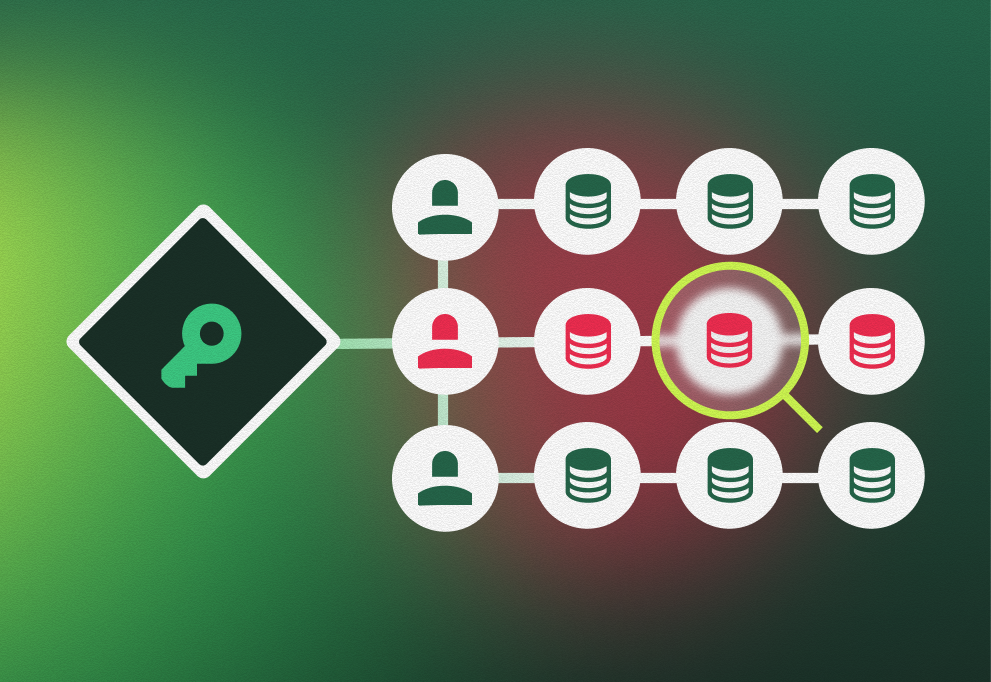


Privileged Identity Management has a definition most security teams can recite in their sleep. Control who gets elevated access, when they get it, for how long, and what they did with it. The original scope was narrow and well understood. A small population of human administrators held the keys. Domain admin. Root. The global admin in the tenant. PIM existed to make those accounts boring: rarely used, tightly gated, always audited.
That scope no longer matches the risk. In a modern cloud estate, the identity with the biggest blast radius is rarely a person. It is a deployment runner with permission to push to every production cluster. It is a service principal that can write across a tenant. It is an integration user wired into a data pipeline nobody remembers building. The practice of PIM, and the broader privileged access management discipline that surrounds it, was correct. Its target population was incomplete.
Where Classic PIM Came From
PIM as a discipline grew out of the hardening work security teams did on Active Directory in the 2000s. The model assumed a bounded set of admins, a directory that owned the truth about privilege, and an audit trail that sat on top of login events. Tooling from the major vendors codified that model, and Microsoft documented the pattern inside Entra for tenant roles. The core ideas (role activation, approvals, time-bounded elevation, access reviews) remain sound. They need a wider canvas.
The Assumptions Baked In
Classic PIM assumes three things. Privilege is a role, that role is held by a human, and elevation is an event the human initiates. Each assumption fits a smaller share of real environments every year.
The Shape of Modern Privilege
Privilege today looks like a kubeconfig secret in a runner image. It looks like an OAuth client that inherited a scope it never needed. It looks like an AI agent with a tool grant on a warehouse and a memory of prior queries. These are privileged identities by any reasonable definition, and most PIM security programs do not see them.
What "Privileged" Actually Means Now
A working definition helps. An identity is privileged if it meets any one of these tests. It can make production changes. It can read or write data subject to regulatory scope. It has cross-tenant or cross-account reach. It holds a long-lived secret that opens access to other systems. It can assume a role that meets any of the above. Under that definition, a small fraction of privileged identities in a cloud estate are human.
Service Accounts and Workload Identities
A service account running a nightly job can carry more standing privilege than any person on the team. NIST SP 800-53 treats non-organizational users and processes as subjects of access control in the same way as people. Most programs apply the control rigor unevenly.
CI/CD Runners and Deploy Agents
A build runner that can deploy to production is a domain admin with a YAML file instead of a password. When attackers get one, they do not bother escalating from there. They already have what they need. MITRE catalogs valid account abuse as the most reliable initial access and lateral movement technique for a reason. This standing-access problem is most visible in overprivileged Azure administrator roles.
AI Agents and Tool Grants
An agent with write access to Jira, a connector to the warehouse, and a vector store of prior tickets is a privileged identity with memory. Its blast radius is the union of every tool it can call. PIM needs to treat that union as the entitlement, not the individual grants.
Why Extending PIM Is Not Optional
Attacker behavior already assumes machine identity is the target. Credential theft, token replay, and abuse of trusted integrations all show up year after year in the Verizon DBIR. The adversary moves toward standing privilege because standing privilege is how fast lateral movement works. Any control set that stops at human admins leaves the cheaper path open.
Zero Trust Requires It
NIST SP 800-207 is explicit that subjects include both users and non-person entities. CISA's maturity model names machine identity management as a pillar on the same level as user identity. A zero trust posture that applies session-bound least privilege access to humans and standing privilege to machines is not a zero trust posture.
Compliance Is Catching Up
Frameworks have started to name non-human identities directly. Mapping your program against the CIS Critical Security Controls shows where automation identities need the same inventory, configuration, and access management rigor as user accounts. The NIST Risk Management Framework treats privilege, for any subject type, as a risk to be characterized and authorized.
What Extended PIM Looks Like in Practice
The practice shifts in specific ways once the identity population is honest.
Discovery for Privileged NHIs
You cannot govern what you cannot enumerate. Discovery has to cross clouds, IdPs, secret vaults, Kubernetes, CI/CD, SaaS admin planes, and the AI platforms that now sit beside them. Output is not a list of accounts. It is a graph: identity to entitlement to resource to owner. Privilege is the path through that graph, not the name on the account.
Intent-Based Permissioning
Machine permissions get granted once and reviewed rarely. Intent-based permissioning inverts that. Observe what an identity actually does, characterize the intent, and constrain the grant to match. The OWASP Authorization Cheat Sheet lays out the pattern: least privilege derived from verified need, not inherited defaults.
Just-in-Time Access for Machines
JIT is well understood for humans. Machines can use the same pattern. A deploy job requests production write at the start of a release window, the request is policy-checked against the pipeline run, and the grant expires when the job finishes. Standing privilege drops. Auditability goes up. The mechanics are the same as human JIT, with the request and approval delegated to pipeline context.
Approval and Audit for Service-to-Service Privilege
Not every machine action needs human approval. Some do. A service that can move funds, a runner that can reset a customer database, an agent that can send email from an executive mailbox: these warrant a workflow. The approval can be automated policy rather than a human click, but the decision needs to be logged as an approval, not buried in service logs.
Lifecycle Ownership
Every privileged identity has an owner. A human. Named. Reachable. When the owner leaves, the identity does not outlive them by years. Joiner-mover-leaver applies to machine identities too, and the leaver event is the one programs skip most often.
Standing vs On-Demand Privilege
The single most useful split in extended PIM is the line between standing and on-demand privilege for non-humans. Standing privilege is the default today and the bulk of the risk. On-demand is the goal. Any identity that can run with less than it holds is a candidate for elevation on request and de-elevation on completion.
Secrets Are Part of the Picture
A privileged machine identity is usually a secret that authenticates it plus a role that authorizes it. Both sides matter. Rotation, scope reduction, and storage get the attention. Grant minimization gets less. The OWASP Secrets Management Cheat Sheet is a reasonable baseline for the credential side. PIM owns the authorization side. Programs that run these as separate tracks produce gaps where a well-rotated key still opens a door it never needed.
Where Token Security Fits
Token Security focuses on the non-human identity population that traditional PIM programs do not cover end to end. The platform does continuous NHI discovery across cloud, IdPs, secret vaults, CI/CD, Kubernetes, and AI platforms, then builds identity context: ownership, usage, entitlement, and blast radius. From there, intent-based permissioning narrows standing grants, lifecycle governance closes out orphaned identities, and automated remediation handles the long tail. The result is that the privileged-identity controls a program already applies to human admins extend to the service accounts, workloads, and agents that make up the rest of the population.
A Pragmatic Path to Extended PIM
Programs do not replatform PIM in a quarter. The useful work is sequenced.
Step One: Inventory Honestly
Count the identities. Separate human from non-human. Tag the privileged subset using the definition above. Most teams find the ratio closer to the widely cited 45 to 1 non-human to human than they expected.
Step Two: Find the Standing Privilege
Within the privileged non-human set, identify which identities hold standing production access, cross-tenant scope, or long-lived secrets. That subset is where extended PIM pays back first.
Step Three: Assign Owners
Every identity in that subset gets a named human owner and a documented purpose. No orphans. No shared mailboxes as owners.
Step Four: Apply JIT Where the Math Works
Start with pipelines and scheduled jobs that have natural start and stop points. Move standing privilege behind time-bounded grants. Leave the always-on identities for a later wave, with tighter monitoring in the interim.
Step Five: Close the Loop on Lifecycle
Wire leaver events, project decommissioning, and integration sunsets into the identity platform. A privileged identity should not outlive its purpose by more than a review cycle.
Step Six: Raise the Bar on New Privilege
New privileged non-human identities should be born with an owner, a scope, a sunset date, and a review. IBM's Cost of a Data Breach research has been consistent that identity compromise drives both breach frequency and dwell time. Preventing new standing privilege is cheaper than clawing it back later. The cross-reference to MITRE's Privilege Escalation tactic is useful during design reviews: if the grant enables a technique in that list, the grant deserves a second look.
Final Thoughts
PIM is not obsolete. The discipline is sound. The population it was built for has changed. An extended PIM practice keeps the rigor (role activation, approvals, time-bounding, review, audit) and applies it to the identities that now hold the most privilege in practice: service accounts, pipelines, workloads, and agents. The work is operational, not philosophical. Count what you have. Find the standing privilege. Put owners on it. Move what can move to on-demand. Close the loop when the purpose ends. The organizations doing this are not adding a new program. They are finishing the one they started.
Secure Every AI Agent.
From Creation to Runtime.