What Is Principle of Least Privilege in Cloud Native Systems
%201.png)
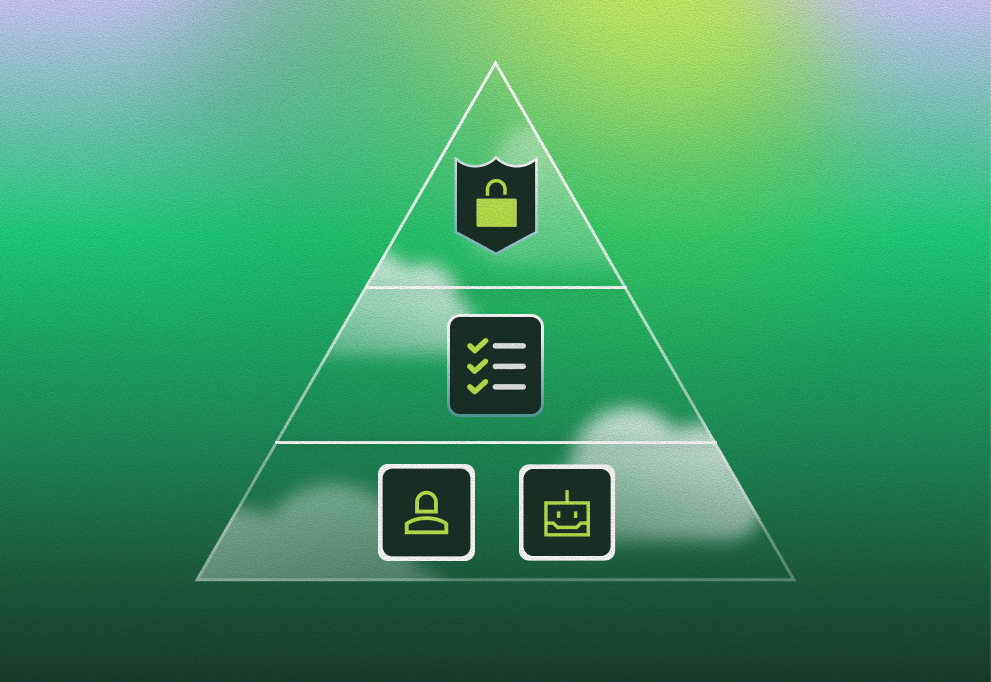


The principle of least privilege is old. The cloud-native version of it is not. In a corporate IT setting, least privilege access control usually means humans get only the access they need to do their job. That framing breaks down the moment you walk into a Kubernetes cluster. Most of what is authenticating, calling APIs, and reading secrets is not a person. It is a pod, a controller, a CI runner, a sidecar, or an operator written by someone who left the company eighteen months ago.
POLP is codified as access control AC-6 in NIST SP 800-53. The control is simple: grant only the privileges necessary to perform assigned tasks. Applying that to a cloud-native system is not simple. The subjects are workloads, not users. The privileges are spread across Kubernetes RBAC, cloud IAM, secret managers, and service meshes. And the whole thing mutates every deploy.
POLP In A Cloud-Native Context
In a cloud-native system, least privilege is mostly about machine identities. Human access still matters, but it is a rounding error compared to the volume of service-to-service calls. A typical production cluster runs hundreds of pods, each potentially talking to cloud APIs, other services, queues, and databases. Each of those calls authenticates as something. That something needs to be scoped.
From Users To Workloads
Classical IAM assumed a human at the keyboard. Cloud-native identity assumes a workload making API calls on its own behalf. The CNCF security whitepaper treats workload identity as a first-class primitive. That shift matters because workloads outnumber humans by orders of magnitude, they are created and destroyed constantly, and they rarely review their own permissions.
Why The Old Model Does Not Fit
Traditional privilege reviews run quarterly. Pods run for minutes. A quarterly review cycle cannot keep up with a workload population that changes every time CI pushes. The review model assumes stable subjects. Cloud-native environments do not have stable subjects. They have ephemeral ones, and the privileges attached to them need to be provisioned and revoked on the same timescale as the workloads themselves.
Kubernetes RBAC Through The ServiceAccount Lens
Kubernetes RBAC is defined clearly in the official RBAC reference. Roles and ClusterRoles define what can be done. RoleBindings and ClusterRoleBindings decide who gets to do it. In most production clusters, the "who" is almost always a ServiceAccount.
ServiceAccounts Are The Actual Subject
Every pod runs as a ServiceAccount, whether you set one or inherit the default. The ServiceAccounts concept page explains the mechanics. If you bind a ClusterRole to the default ServiceAccount in a namespace, every pod in that namespace inherits those rights. That is how clusters end up with workloads that can list secrets cluster-wide because someone wanted a demo to work three releases ago.
Namespace As A Security Boundary
A namespace is the coarsest useful boundary inside a cluster. It is not a hard tenancy boundary by itself, but combined with RBAC, NetworkPolicy, and ResourceQuota, it becomes one. A Role only grants access within its namespace. A ClusterRoleBinding to a narrowly scoped ClusterRole inside a single namespace is usually preferable to a cluster-wide binding, even when the verbs are the same.
Avoiding Wildcards
Wildcards are how least privilege quietly dies. A Role with verbs 'on resources' is operationally identical to cluster-admin inside the namespace. The CIS Kubernetes Benchmarks call this out repeatedly. Explicit verb lists are longer and less elegant. They also tell you exactly what the workload can do without cross-referencing API groups.
Pod Identity Versus Workload Identity
These two terms get used interchangeably, and they should not be. Pod identity is the Kubernetes-side construct: the ServiceAccount token mounted into the pod, used to authenticate to the Kubernetes API. Workload identity is the broader federation: that same pod proving who it is to AWS, GCP, Azure, a secret vault, or another service outside the cluster.
The OIDC Bridge
Modern workload identity leans on OIDC federation. The cluster runs a projected ServiceAccount token signer. The cloud provider trusts that signer. A pod presents a short-lived JWT, and the cloud exchanges it for scoped cloud credentials. This is the mechanism behind IRSA on AWS, Workload Identity on GKE, and managed identities for containers on Azure. The federation is stateless and time-bound.
Short-Lived Tokens By Default
The practical payoff of OIDC federation is that nothing persistent lives on the pod. No long-lived access key in a Secret. No static credential in a config map. Tokens expire in minutes. If an attacker steals a token, they get a short window, not a lifetime, which is the zero trust least privilege ideal for ephemeral workloads. This aligns with zero trust architecture and removes a large category of credential-theft scenarios captured under MITRE ATT\&CK T1078.
Reducing Attack Paths At Pod And Cluster Level
Least privilege cuts attack paths. An attacker who lands in a pod should not be able to reach the cluster admin role, and should not be able to reach production databases from a staging workload. Most real-world cluster compromises follow the pattern documented in MITRE ATT\&CK TA0004: initial access into a pod, then privilege escalation through a loosely bound ServiceAccount, then lateral movement.
Pod-Level Controls
At the pod level, SecurityContext settings matter as much as RBAC. Dropping capabilities, running as non-root, using a read-only root filesystem, and setting automountServiceAccountToken false for pods that do not need the API all close common paths. The NIST SP 800-190 container guidance lays this out in detail.
Cluster-Level Controls
At the cluster level, NetworkPolicy controls egress and ingress between pods. Admission controllers enforce policy at write time. Audit logs give you the evidence trail. None of this is new. What is new is the pace: every deploy can add a new ServiceAccount, a new Role, a new binding. Controls that only run at design time miss most of the damage.
Implementing POLP: A Practical Sequence
The goal is to get from a permissive default to an explicit baseline without breaking production. This is not a one-weekend project. It is a sequence.
Start From Deny-All
The cleanest starting point is a namespace with no NetworkPolicy allowances, a default ServiceAccount with no RoleBindings, and admission rules that reject pods without explicit settings. Then add back what workloads actually need, one dependency at a time. This is the reverse of how most clusters were built, which is why retrofitting is harder than starting fresh.
Scope Cloud Roles Per Workload
A single cloud IAM role attached to every node is convenient and wrong. It means every pod on that node inherits the same cloud permissions, regardless of what the pod actually does. Scope cloud roles per workload using OIDC federation. A database migration job does not need the permissions of the API server. Separate identities, separate roles.
Admission Controllers Enforce The Invariants
Policy engines enforce rules at write time. Block pods that request privileged true. Block RoleBindings to cluster-admin outside a narrow allowlist. Block ServiceAccounts with no owner label. The OWASP authorization guidance emphasizes checking authorization at every layer, and admission control is the write-path version of that check.
Rotate Credentials And Handle Sidecars
Rotate anything that does not rotate itself. Short-lived tokens handle themselves. Long-lived credentials in secrets need schedules, alerts when rotation fails, and automated pipelines. The OWASP secrets management cheat sheet covers the ground. Sidecars deserve their own attention: a sidecar shares the pod's ServiceAccount by default, which means an observability agent might inherit permissions intended for the main container. Either narrow the pod identity to the minimum both containers need, or split them into separate pods.
Continuous Least Privilege For Non-Human Identities
Token Security focuses on non-human identity security in cloud-native environments. The platform continuously discovers NHIs across Kubernetes clusters, cloud IAM, secret vaults, CI/CD systems, and AI platforms, then correlates them with the workloads and pipelines that use them. It surfaces over-permissioned ServiceAccounts, dormant cloud roles, and bindings that drifted past their original intent, and proposes scoped replacements based on observed usage. The goal is enforcement that matches actual behavior, without requiring agents on every node or manual review cycles that cannot keep up with deploy velocity.
Microservices, APIs, And The Wider Picture
POLP does not stop at the cluster edge. Microservices talk to each other over APIs, and each call is an authorization decision. The NIST SP 800-204 guidance covers microservices security patterns, including service-to-service authentication and token propagation. Mesh-level mTLS and per-request authorization sit on top of pod-level identity. They are not substitutes for it.
Identity Propagation Is Where Things Break
When Service A calls Service B, whose identity gets checked at B? The pod's? The caller user's? Both? Getting this consistent across a mesh is harder than it looks, and mistakes here are how privilege gets silently escalated. Pick a propagation model, document it, and enforce it.
Final Thoughts
POLP is a practice, not a config, and it sits at the center of cloud native security. A cluster that was least-privilege on Monday is almost certainly not least-privilege on Friday, because deploys added new workloads, new bindings, and new cloud roles. The config drifts. The original intent fades. Engineers leave. The real enemy is not the first misconfiguration, which gets caught in review. It is the slow accumulation of small exceptions that nobody thought were risky at the time. Treat least privilege as something you maintain, the way you maintain a build system or a dependency graph.
Secure Every AI Agent.
From Creation to Runtime.