
The Role of Identity Metadata in Modern Security Architectures
%201.png)
Christian Simko
The Role of Identity Metadata in Modern Security Architectures
For decades, the cybersecurity industry has been obsessed with the credential. We focused our energy on making passwords longer, storing API keys in tighter vaults, and forcing multifactor authentication on every possible login screen. We believed that if we could absolutely guarantee the cryptographic validity of the key, the system would remain secure.
This approach was fundamentally flawed. It assumed that authentication was the end of the security journey. In reality, a valid credential tells you absolutely nothing about the intent of the actor holding it. It is merely a string of characters.
Today, the enterprise attack surface has evolved beyond human logins. Organizations are flooded with millions of non-human identities (NHIs) belonging to microservices, serverless functions, and autonomous AI agents. These machines do not use passwords. They use tokens, certificates, and API keys. When we evaluate these machine credentials in a vacuum, we are completely blind to the context surrounding them.
This is where identity metadata becomes the most critical asset in your security architecture.
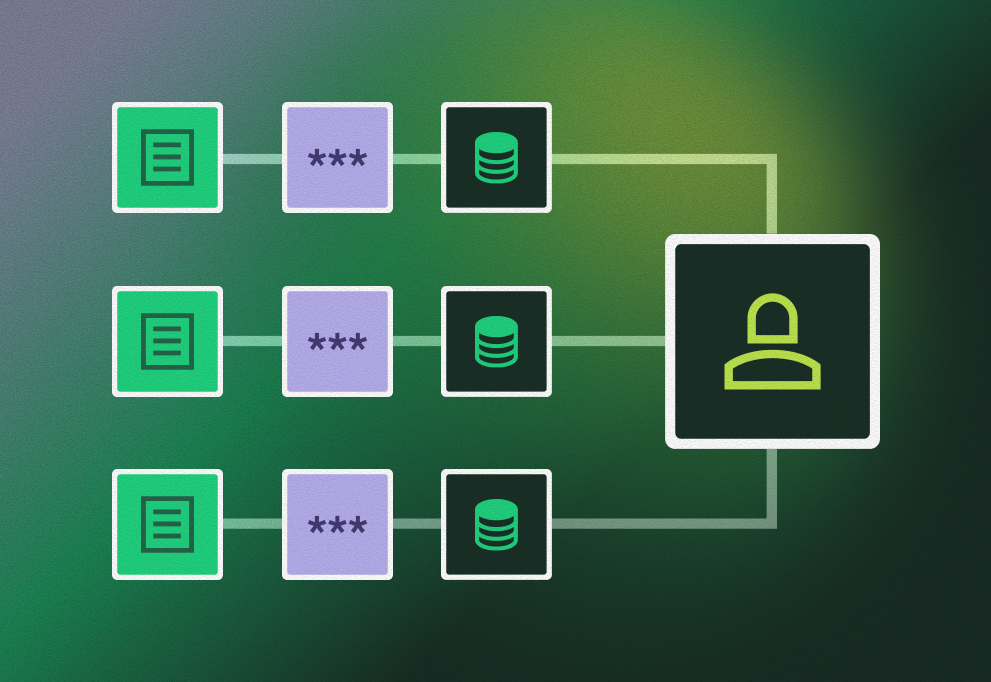
Identity metadata is the rich, contextual layer of information that surrounds a credential. It tells us who created the key, why it was created, what data it is allowed to touch, and how it is expected to behave. At Token Security, we recognize that moving from a perimeter-based defense to an identity-first defense is impossible without this data. Without metadata, you cannot govern your digital workforce. You can only watch it operate in the dark.
Introduction: Moving Beyond the Cryptographic Key
The core problem with modern access control is a lack of vocabulary. When an API gateway receives a request, the request usually contains a bearer token. The gateway checks a database to see if the token is active. If the token is active, the gateway approves the request.
This transaction is entirely devoid of context. The gateway does not know that this specific token was created for a temporary testing environment. It does not know that the token is currently being used from an unrecognized residential IP address in another country. It only knows that the math checks out.
Adversaries understand this limitation perfectly. They no longer try to break through firewalls using brute force. They use valid credentials to walk straight through the front door. Once an attacker steals a machine credential, they inherit the exact same level of trust as the legitimate application.
To stop these attacks, security teams must fundamentally change the question they ask at the point of authentication. We must stop asking, "Is this key valid?" We must start asking, "Does this specific transaction make sense based on the historical and contextual metadata of this identity?"
What Exactly Is Identity Metadata?
Identity metadata is best understood as the "DNA" of an access credential. For human users, metadata has existed in corporate directories for years. A human identity record in Identity and Access Management (IAM) platforms typically includes the user's department, their direct manager, their physical office location, and their assigned devices.
For non-human identities, this critical information is almost always missing. Machine identities are frequently created ad-hoc by developers to solve immediate engineering problems. They are born without owners, without descriptions, and without boundaries.
Bringing metadata to machine identities requires cataloging several distinct categories of information.
Contextual Metadata
Contextual metadata defines the origin and ownership of the identity. This includes the specific developer who originally provisioned the API key. It includes the ticketing system request that justified its creation. It maps the identity to a specific business unit or application stack. If a service account begins acting erratically, contextual metadata tells the security operations center exactly which engineering team they need to contact.
Behavioral Metadata
Behavioral metadata tracks the operational reality of the identity. It records the specific API endpoints the identity accesses on a normal Tuesday. It tracks the volume of data typically transferred during a standard session. It notes the geographic regions or internal Virtual Private Cloud (VPC) subnets where the identity usually operates.
Relational Metadata
Relational metadata defines the web of connections between the identity and the rest of the infrastructure. It shows which specific code repositories hold the application that uses the credential. It maps the data stores the identity is permitted to query. In modern architectures, relational metadata visualizes the "Identity Graph," showing exactly how a single compromised token could be used for lateral movement across different cloud environments.
Lifecycle Metadata
Lifecycle metadata governs the element of time. It tracks the exact timestamp of creation. It records the last time the credential was successfully rotated. It defines the expiration date or the Time-To-Live (TTL) for the token. This data is critical for preventing the accumulation of orphaned secrets that plague legacy systems.
Table 1: The Identity Metadata Matrix
Why Modern Security Architectures Demand Metadata
The transition to Zero Trust Architecture has made metadata non-negotiable. Zero trust operates on the principle of "never trust, always verify." You cannot continuously verify an entity if you do not have continuous data about that entity.
The Foundation of Zero Trust Policy
In a mature zero trust environment, access decisions are dynamic. A policy engine evaluates every single request in real time. To make an accurate decision, the policy engine requires signals.
If a workload requests access to a highly sensitive customer database, the policy engine must query the metadata. Is this workload running the latest, vulnerability-free container image? Has this specific machine identity historically accessed this database, or is this a completely new behavior? Does the relational metadata confirm that this workload is officially associated with the billing application?
If the metadata does not align with the request, the zero trust architecture can instantly deny access, even if the cryptographic token is perfectly valid. The Identity Defined Security Alliance (IDSA) highlights that this context-driven approach is the only proven method to stop credential-based breaches.
The Blind Spot of Cloud Native Environments
Cloud environments are built on ephemeral components. Containers are spun up, execute a specific task, and are destroyed minutes later. When security teams rely strictly on IP addresses or network logs, they face an impossible challenge. An IP address in a Kubernetes cluster might belong to a payment processing pod at 10:00 AM and a public-facing web server at 10:05 AM.
Identity metadata travels with the workload. By tying the security policy to the identity metadata rather than the underlying infrastructure, organizations maintain persistent identity security regardless of how rapidly the environment shifts and scales.
The Rise of Agentic AI and Autonomous Systems
The explosion of artificial intelligence is the ultimate catalyst for metadata-driven security. We are deploying autonomous AI agents to manage our systems, write our code, and interact with our data.
Unlike human users who follow predictable workflows, AI agents utilize probabilistic reasoning. They determine their own paths to achieve a stated goal. To navigate the enterprise, these agents consume vast amounts of machine identities. They mint temporary tokens to access GitHub, they generate API keys to query Salesforce, and they assume cloud IAM roles to provision storage.
Proving Intent in an Autonomous World
When an AI agent executes an action, security teams face a terrifying question. Is the agent performing a legitimate task, or has it been compromised by an adversarial prompt injection?
Without metadata, this question is unanswerable. A secrets-only approach simply hands the agent a least-privilege token and hopes for the best. This is a severe violation of the NIST AI Risk Management Framework, which demands strict transparency and governance over AI operations.
Metadata provides the "Chain of Thought" audit trail. It links the temporary token back to the specific AI agent. It links the AI agent back to the specific user prompt that initiated the workflow. If an agent suddenly attempts to delete a database, the security platform can analyze the metadata in milliseconds. If the behavioral metadata indicates this action is highly anomalous for this specific agent profile, the system can sever the access path before the command executes.
How Identity Metadata Fuels Continuous Access Governance
Gathering metadata is only the first step. The true value is unlocked when organizations feed this data into a Continuous Access Governance (CAG) engine.
Traditional access reviews are a painful, manual process performed once a year to satisfy auditors. Managers stare at massive spreadsheets and blindly approve access to avoid breaking critical business systems. This practice offers zero actual security value.
Automated Right-Sizing
Metadata enables automated right-sizing. A continuous governance platform constantly compares the permissions an identity possesses (its static policy) against the behavioral metadata of what the identity actually uses.
If an AWS service account holds an overarching policy that grants it access to fifty different cloud services, but the behavioral metadata proves it only ever calls two specific S3 buckets, the platform flags the discrepancy. Security teams can then confidently rewrite the policy to follow AWS best practices for least privilege. They can strip away the forty-eight unused permissions with absolute certainty that they will not cause an operational outage.
Lifecycle Automation
Metadata also solves the problem of orphaned accounts. By monitoring the lifecycle and behavioral metadata, governance platforms can identify machine identities that have been dormant for over thirty days.
Instead of waiting for a manual review, the system can automatically suspend the credential. If the credential remains unused for another thirty days, the system permanently deletes it. This automated hygiene systematically shrinks the attack surface and eliminates the primary targets sought by advanced persistent threats.
Overcoming the Challenges of Metadata Collection
While the benefits are undeniable, harvesting identity metadata across a sprawling enterprise is a massive engineering challenge.
The Problem of Siloed Systems
The primary obstacle is fragmentation. The contextual metadata (who owns the project) lives in Jira or ServiceNow. The relational metadata (where the code lives) is stored in GitHub or GitLab. The behavioral metadata (what the token does) is buried in millions of raw AWS CloudTrail or Azure Monitor logs.
Organizations cannot expect their security analysts to manually query five different platforms to understand a single access event during an active incident.
Consolidating the Identity Graph
To make metadata actionable, enterprises must deploy platforms that centralize this information. They must ingest signals from the identity providers, the cloud infrastructure, the code repositories, and the secret vaults.
By aggregating these diverse data streams, security teams build an "Identity Graph." This graph visualizes the complex relationships between users, machines, secrets, and data. It transforms raw, incomprehensible log files into clear, contextualized security intelligence. This consolidated view is the holy grail of modern Identity and Access Management (IAM) architecture.
Table 2: Legacy Security vs. Metadata-Driven Security
The Impact on Compliance and Auditability
Beyond threat prevention, identity metadata completely transforms the regulatory compliance landscape.
Frameworks like SOC 2, ISO 27001, and the CIS Controls require organizations to prove that they are actively managing access to sensitive systems. In a legacy environment, providing this proof for non-human identities is incredibly difficult. Auditors are handed lists of service accounts with no discernible business purpose.
Metadata provides the evidence. When an auditor asks why a specific machine identity exists, the security team can instantly produce the contextual metadata linking it to an approved business project. When the auditor asks if the principle of least privilege is enforced, the team can showcase the behavioral metadata proving that unused permissions are systematically removed.
This level of transparency turns agonizing, month-long audit preparations into seamless, automated reporting exercises.
The Future: Identity Metadata as the Security Control Plane
The network perimeter is dead. The endpoint is highly compromised. Identity is the only remaining control plane that offers comprehensive visibility across hybrid clouds, SaaS applications, and on-premise infrastructure.
However, identity alone is an empty vessel. A username or an API key is just a label. The metadata is the actual intelligence.
As we look toward the future of cloud security, we must accept that automation will continue to accelerate. The volume of machine identities will grow from the millions into the billions. The only way to secure a workforce of billions of autonomous actors is to understand them intimately.
Security tools must evolve to become deeply metadata-aware. They must be able to parse the intent of an API security request just as easily as they parse the cryptographic signature of the token.
Conclusion: Context Is the Ultimate Security Control
We have reached the limits of what cryptographic validation can achieve on its own. Ensuring that a key is complex and heavily encrypted is a foundational requirement, but it is no longer a sufficient defense against modern adversaries or rogue automation.
The future of enterprise protection relies entirely on context. We must shift our focus from the secret itself to the identity wielding it. By aggressively capturing, centralizing, and acting upon contextual, behavioral, relational, and lifecycle metadata, we can finally tame the chaos of the cloud.
At Token Security, we believe that identity metadata is the engine of machine-first security. It provides the visibility necessary to discover hidden risks, the intelligence required to automate governance, and the context needed to secure the next generation of autonomous AI systems. Embracing metadata is not just an architectural upgrade. It is a fundamental requirement for surviving the modern threat landscape.

Frequently Asked Questions About Identity Metadata
What is the difference between an identity and identity metadata?
An identity is the core identifier used to access a system, such as a username, a service account ID, or an API key. Identity metadata is the descriptive information attached to that identifier. While the identity allows the system to recognize the requestor, the metadata provides the context about who owns the identity, what it normally does, and why it was created.
Why is behavioral metadata critical for stopping breaches?
Behavioral metadata establishes a baseline of normal activity for an identity. If a machine identity is compromised by an attacker, the attacker will inevitably use it in ways that deviate from this baseline. They might access new databases or download unusually large volumes of data. Behavioral metadata allows security systems to spot these anomalies instantly and block the compromised identity before significant damage occurs.
How does metadata help enforce the principle of least privilege?
Enforcing least privilege requires knowing exactly what permissions an identity actually needs. By analyzing behavioral and relational metadata, security teams can see a historical record of every API call a machine identity has made. They can then safely remove any overarching permissions that have never been utilized, tightly scoping the identity without risking an application outage.
Why do AI agents require specialized identity metadata?
AI agents operate autonomously and make decisions on the fly, often creating temporary sub-agents to complete complex tasks. Specialized metadata is required to track the "chain of custody" for these actions. It links the temporary tokens used by the agent back to the primary agent profile and the human user who initiated the prompt, ensuring accountability for autonomous actions.