
AI Agent and Identity Verification: Securing the Identities That Act on Your Behalf



AI agents are becoming first-class actors inside the enterprise. They write code, move data, trigger workflows, and interact directly with production systems. To do their jobs, they’re granted identities, such as API tokens, service accounts, cloud roles, that allow them to act autonomously and at scale.
The problem is that AI agents don’t age gracefully. They’re often created quickly to support experiments, pilots, or fast-moving initiatives. When those initiatives slow down or stop, the agents don’t disappear. Their identities remain active, trusted, and frequently over-permissioned long after anyone remembers who created them or why they still exist.
For security teams, this creates a growing blind spot. Maybe you can see the agent. Maybe you can see what it can access. But in many cases, you can’t confidently answer the most important question: Who owns this agent today and should it still be running?
Ownership Is a Missing Control Component for AI Agents
Most security tools attempt to infer ownership based on naming conventions, IAM metadata, or activity logs. Sometimes that works. Often, it doesn’t.
AI agents make this problem worse. They’re spun up by developers, data scientists, platform teams, or even other agents. They’re shared across services, reused across environments, and rarely revisited once they’re working.
Without verified ownership, AI agents quietly become high-risk infrastructure: trusted by systems, invisible to humans. That’s why Token Security is launching the AI Agent and Identity Verification feature in the Token Security platform.
Introducing AI Agent and Identity Verification
The new AI Agent and Identity Verification feature is designed to establish clear, verified ownership for AI agents and the non-human identities (NHIs) they use.
Instead of guessing who owns an agent, Token allows security teams to ask and record the answer.By reaching out directly to the people most likely responsible for an agent, Token helps organizations replace assumptions with confirmation and turn AI agent sprawl into a controlled, auditable inventory.
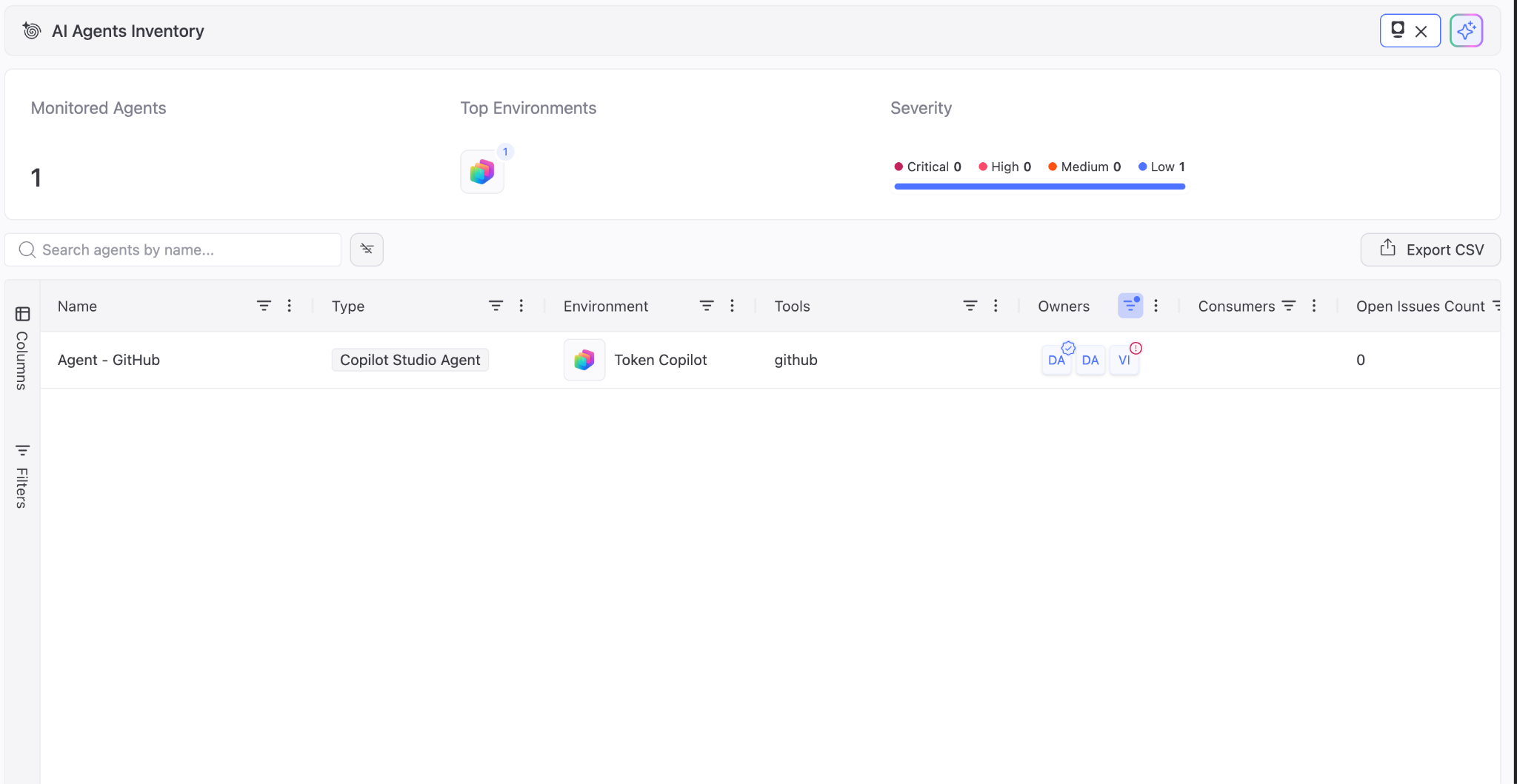
How Verification Works in Practice
When Token detects an AI agent or non-human identity, it uses activity and contextual signals to identify potential owners. From there, security teams can initiate a verification request directly from the platform.
That request is sent through tools users already live in, like Slack. The message includes enough context for the recipient to immediately recognize what’s being asked: the agent’s name, where it exists, and what it’s been doing recently. With a single click, the recipient can confirm ownership or state that the agent is not theirs.
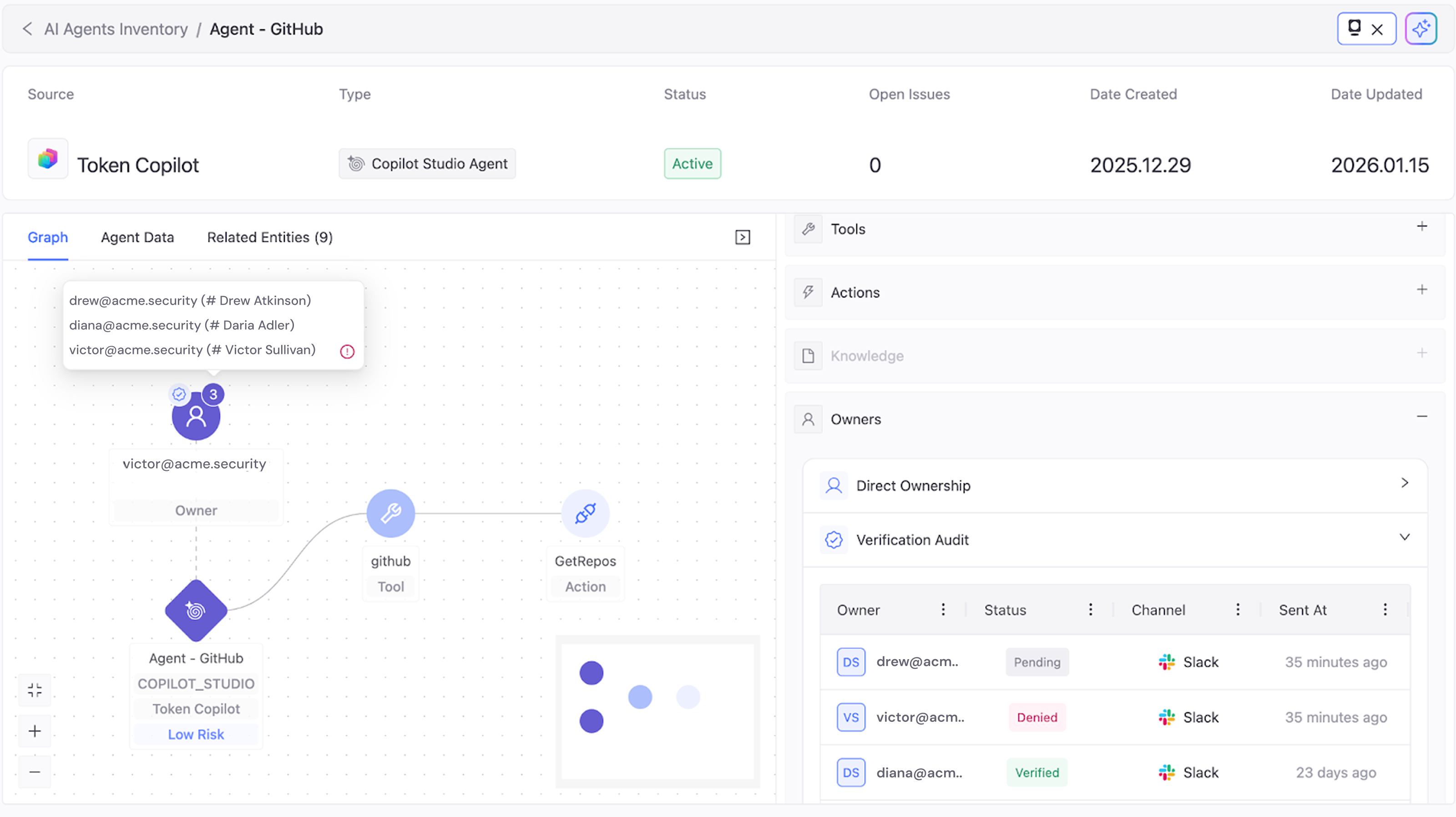
Behind the scenes, Token records the response automatically. Ownership status is timestamped, audited, and reflected instantly across the platform from the agent’s identity page to inventory views and graphs. There’s no need to chase messages, copy responses, or manually update records. Ownership becomes a fact, not a follow-up task.
Why This Matters for AI Security
AI agents don’t just introduce new functionality, they introduce new risk. An agent with no verified owner is an agent no one is accountable for. And, when no one is accountable, access tends to accumulate, credentials go unrotated, and decommissioning never happens.
With the AI Agent and Identity Verification feature, security teams gain the clarity they need to act. Verified ownership makes it possible to understand what access an agent has and truly needs, what systems it’s connected to, and whether it should continue to exist at all.
Just as importantly, unverified agents are no longer invisible. They’re clearly identified, easy to track, and ready for remediation.
From Visibility to Control
The AI Agent and Identity Verification feature turns ownership into action. It helps organizations reduce risk from forgotten agents, streamline audit and compliance efforts, and eliminate the manual effort traditionally required to track AI agent and non-human identities. Instead of relying on institutional knowledge or outdated documentation, teams get real-time, human-verified answers.
And as AI agents continue to proliferate, this ownership layer is essential for access reviews, automated remediation, and smarter policy enforcement across AI, human and non-human identities alike.
Built for What Comes Next
As Token continues to expand visibility across human, AI agents, and non-human identities, verified ownership enables deeper insights, smarter access decisions, and more automated remediation to ensure a stronger security and compliance posture.
You can’t secure what you don’t understand, and you can’t understand what no one owns. Token Security is now solving this challenge with the new AI Agent and Identity Verification feature. To see it in action, request a demo today.
Secure Every AI Agent.
From Creation to Runtime.